Angry locals burn Ebola treatment centre in Democratic Republic of the Congo
發佈日期: 2026-05-22 12:08
TVB News
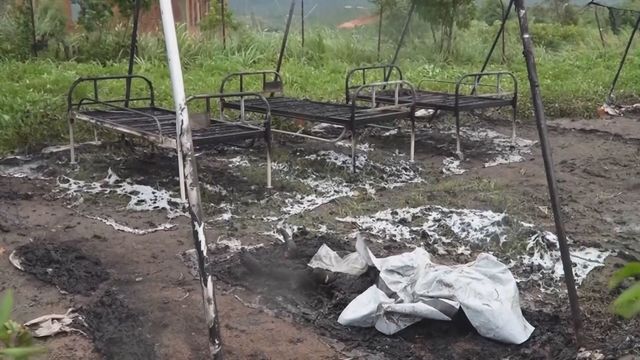


People set fire to an Ebola treatment centre in a town at the heart of the outbreak in eastern Congo on Thursday after being stopped from retrieving the body of a local man, a witness and a senior police officer said, as fear and anger grow over a health crisis that doctors are struggling to contain.

The arson attack in Rwampara reflects the challenges of health workers trying to curb a rare Ebola virus by using stringent measures that might clash with local customs, such as burial rites.

The disease has been spreading for weeks in a region lacking in health facilities and where many people are on the move to escape armed conflicts.

The center in Rwampara was burned by local youths who became angry while trying to retrieve the body of a friend who had apparently died of Ebola, according to a witness who spoke to The Associated Press by telephone.

Benjamin Bainduka had spent Thursday waiting to retrieve the body of his older brother, Ansimwa Katabukwa, who died the day before at the hospital of suspected Ebola virus disease.

On arrival, Bainduka found a group of people who had gathered after a local soccer player, well loved by the community, had also died of suspected Ebola.

The group wanted the body back, so they could take it home and hold a proper burial - a practice that has been denied to families due to the ongoing outbreak.

"That's when the local youths became angry, demanding to know why the young man had died. This caused a commotion, culminating in the youths setting fire to the treatment centre," he said.

"Inside was the body of my own brother, Ansimwa Katabukwa, which was burned beyond recognition. Until now, his body remains there. He hasn't been placed in a coffin or buried."

The dangerous work of burying suspected victims is being managed wherever possible by authorities because the bodies of those who die from Ebola can be highly contagious and lead to further spread when people prepare bodies for burial and gather for funerals.

That policy can be extremely unpopular with victims' families and friends, who aren't given the chance to bury their loved ones.

When someone dies of suspected Ebola, their bodies must be buried in accordance with health regulations - usually placed in a coffin, sprayed with disinfectant, and carried away by healthcare workers.

The Ebola treatment centre had only been holding the bodies of those suspected of dying of Ebola, and the main treatment centre remained inside Rwampara general hospital.

Despite the scene in the courtyard, healthcare workers continued to carry people suspected to be sick with Ebola into the hospital on stretchers.

Outside the hospital, Congolese soldiers and police stood guard to prevent more unrest.