
繁

- 简
- 繁
- En


Thailand go to the polls with Bhumjaithai Party capturing most votes
News
發佈: 2026-02-09 20:25
撰文: 無綫新聞

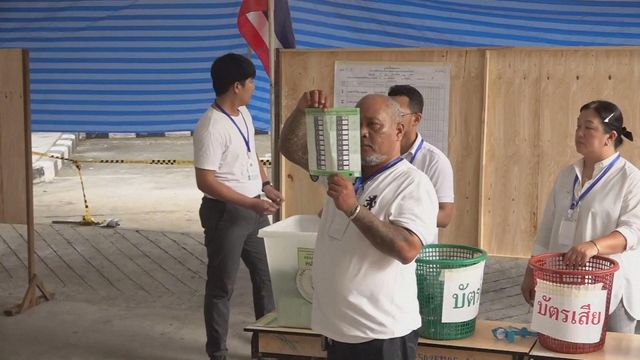
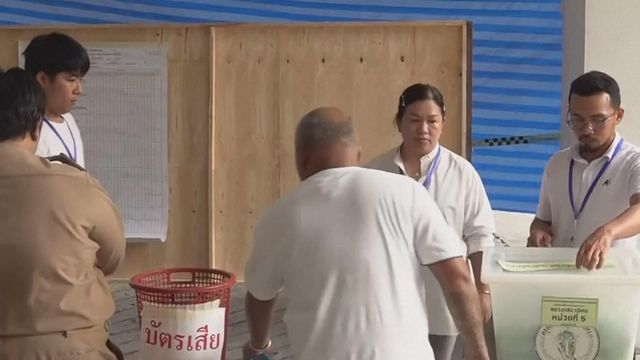
Thailand's Bhumjaithai Party has emerged as the largest party in the country's House of Representatives, according to preliminary results released by the country's Election Commission.
With 94 percent of the vote counted so far, the Bhumjaithai Party captured 195 seats, while the People's Party and the Pheu Thai Party ranked second and third, respectively, with 118 and 74 seats.
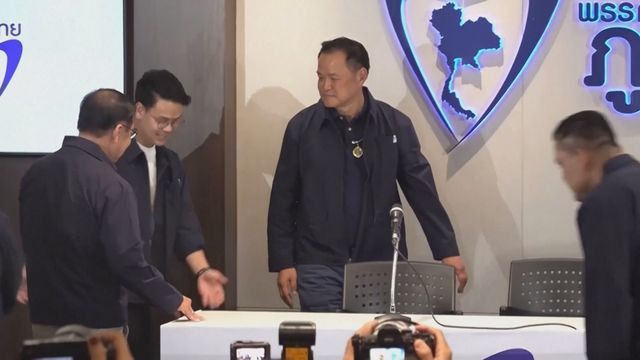
The Bhumjaithai party of Prime Minister Anutin Charnvirakul took a commanding lead in Thailand's general election Sunday. "At this moment, our people have given us more than what we expected this morning. So we owe our voters a fortune and we will only repay them by working at our utmost to bring all the good things to them and to our country", the prime minister said.
On the Election Commission's website just before midnight it showed the conservative Bhumjaithai party had attained 195 seats in the 500-member House of Representatives.
The numbers were still not clear as to whether the Bhumjaithai party would have to seek partners in a coalition government.
The progressive People's Party, which had been tipped to win the most seats was holding down second place with around 118 seats. The party is the successor to the Move Forward Party which won the most seats in the House in 2023, but was blocked from forming a government by conservative lawmakers and then forced to dissolve.
The party acknowledged this time round, they wouldn't come first and said it would respect the results.
Natthapong Ruengpanyawut, leader of People's Party said: "If we see the current (unofficial) result, we are quite sure that we cannot win this election. We respect to the parliamentary system that we have to allow the winner to form the government first."
Pheu Thai, the populist party representing the political machine of former Prime Minister Thaksin Shinawatra, followed behind with 78 seats.
The 500-member House comprises 400 lawmakers directly elected based on constituencies while 100 others are chosen from party list nominees who gain seats according to each party's proportional share of the vote on a separate ballot indicating party preference.
The battle for support from 53 million registered voters came against a backdrop of slow economic growth and heightened nationalist sentiment.
With 94 percent of the vote counted so far, the Bhumjaithai Party captured 195 seats, while the People's Party and the Pheu Thai Party ranked second and third, respectively, with 118 and 74 seats.
The Bhumjaithai party of Prime Minister Anutin Charnvirakul took a commanding lead in Thailand's general election Sunday. "At this moment, our people have given us more than what we expected this morning. So we owe our voters a fortune and we will only repay them by working at our utmost to bring all the good things to them and to our country", the prime minister said.
On the Election Commission's website just before midnight it showed the conservative Bhumjaithai party had attained 195 seats in the 500-member House of Representatives.
The numbers were still not clear as to whether the Bhumjaithai party would have to seek partners in a coalition government.
The progressive People's Party, which had been tipped to win the most seats was holding down second place with around 118 seats. The party is the successor to the Move Forward Party which won the most seats in the House in 2023, but was blocked from forming a government by conservative lawmakers and then forced to dissolve.
The party acknowledged this time round, they wouldn't come first and said it would respect the results.
Natthapong Ruengpanyawut, leader of People's Party said: "If we see the current (unofficial) result, we are quite sure that we cannot win this election. We respect to the parliamentary system that we have to allow the winner to form the government first."
Pheu Thai, the populist party representing the political machine of former Prime Minister Thaksin Shinawatra, followed behind with 78 seats.
The 500-member House comprises 400 lawmakers directly elected based on constituencies while 100 others are chosen from party list nominees who gain seats according to each party's proportional share of the vote on a separate ballot indicating party preference.
The battle for support from 53 million registered voters came against a backdrop of slow economic growth and heightened nationalist sentiment.
更多新聞



熱門新聞


條款及細則
條款及細則
隨時隨地觀看新聞,立即下載

'%3e%3cpath%20id='路径_2'%20data-name='路径%202'%20d='M579.91,145.916a42.433,42.433,0,1,0,42.528,42.433,41.772,41.772,0,0,0-42.528-42.433m0,68.138a25.8,25.8,0,1,1,23.91-25.705,24.572,24.572,0,0,1-23.91,25.705m-92.9-68.138a42.433,42.433,0,1,0,42.528,42.433,41.772,41.772,0,0,0-42.528-42.433m0,68.138a25.8,25.8,0,1,1,23.911-25.705,24.572,24.572,0,0,1-23.911,25.705m-110.38-55.1v17.956h42.621A37.793,37.793,0,0,1,409.8,199.6a44.037,44.037,0,0,1-33.266,13.135,47.914,47.914,0,0,1,0-95.734,45.836,45.836,0,0,1,32.415,12.854l12.664-12.664a62.75,62.75,0,0,0-45.174-18.144,66.153,66.153,0,1,0,0,131.739,60.2,60.2,0,0,0,45.93-18.9A59.452,59.452,0,0,0,438.154,170.2a58.644,58.644,0,0,0-.946-11.246Zm451.638,14.364a39.409,39.409,0,0,0-36.291-26.933A40.259,40.259,0,0,0,752,188.822a41.49,41.49,0,0,0,42.055,42.432,42.148,42.148,0,0,0,35.344-18.9l-14.459-9.45a24.193,24.193,0,0,1-20.885,11.718,21.546,21.546,0,0,1-20.6-12.852l56.7-23.436ZM770.431,187.5a23.249,23.249,0,0,1,22.21-24.76,16.441,16.441,0,0,1,15.781,9.45Zm-46.023,40.637h18.9V103.577h-18.9Zm-30.525-72.77h-.568a29.385,29.385,0,0,0-22.3-9.449,42.526,42.526,0,0,0,0,85.053,28.908,28.908,0,0,0,22.3-9.449h.663v6.142c0,16.256-8.7,24.854-22.681,24.854a23.431,23.431,0,0,1-21.358-15.12l-16.255,6.71a40.446,40.446,0,0,0,37.8,25.044c21.829,0,40.354-12.853,40.354-44.134V148.468H693.883Zm-21.359,58.594A24.381,24.381,0,0,1,648.9,188.443a24.57,24.57,0,0,1,23.625-25.894,23.909,23.909,0,0,1,22.682,25.894,23.722,23.722,0,0,1-22.682,25.611ZM915.592,103.484H870.985V228.135h18.9V180.883h25.988a38.747,38.747,0,1,0,0-77.4Zm.471,60.1H889.6V120.872h26.461a21.358,21.358,0,1,1,0,42.715m115.012-17.861a34.97,34.97,0,0,0-33.171,18.9l16.539,6.9a17.583,17.583,0,0,1,17.01-9.452,17.958,17.958,0,0,1,19.564,16.066v1.324a41.193,41.193,0,0,0-19.373-4.819c-17.767,0-35.913,9.449-35.913,28.35a28.352,28.352,0,0,0,30.9,27.407,26.277,26.277,0,0,0,23.722-12.191h.661v9.45h17.956v-47.44c-.095-22.115-16.539-34.5-37.9-34.5m-2.268,68.328c-6.047,0-14.552-3.024-14.552-10.585,0-9.45,10.583-13.325,19.751-13.325a33.169,33.169,0,0,1,17.011,4.159,22.588,22.588,0,0,1-22.21,19.751m105.468-65.586-21.357,54.057h-.663l-22.02-54.057H1070.2l33.172,75.6-18.9,42.054h19.374l51.128-117.563ZM966.718,228.135h18.9V103.577h-18.9Zm-840.431-101.5L4.377,4.631A20.131,20.131,0,0,0,.029,18.24V238.72a21.079,21.079,0,0,0,3.4,12.569Zm4.064-3.876,37.8-37.8L25.356,3.214A18.9,18.9,0,0,0,8.912.945Zm89.4-8.695L172.5,87.417l-38.652,39.221,41.3,41.3L219.28,142.8c14.46-7.844,14.46-20.791.472-28.73m-89.4,16.539L7.495,254.974a17.768,17.768,0,0,0,17.768-1.607l144.686-82.219h.566Z'%20fill='%23fff'/%3e%3c/g%3e%3c/svg%3e)


Copyright 2026 Television Broadcasts Limited